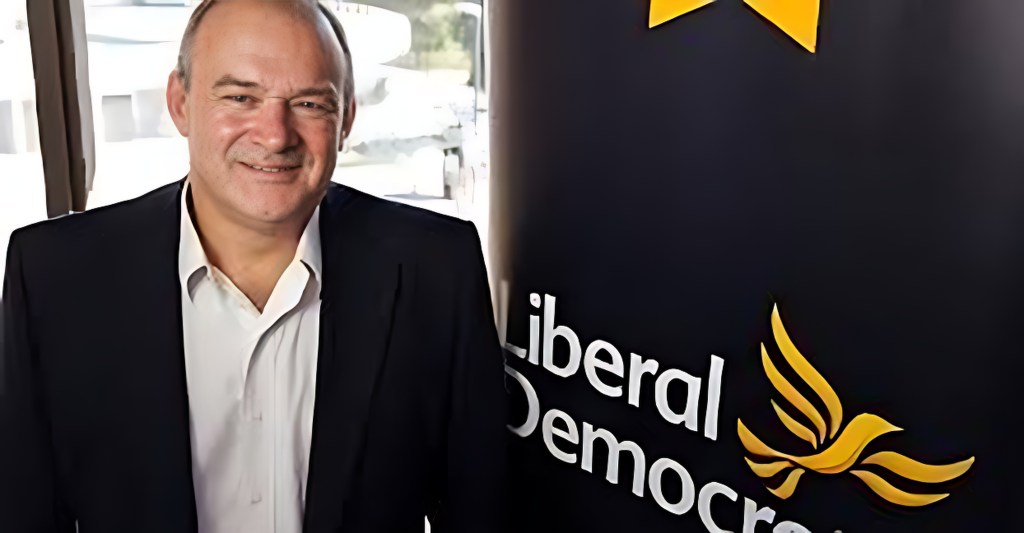
The first of the major parties’ manifestos was released on June 10th, 2024. It is an absolute beast of a document, sitting at 116 pages long. Sir Ed Davey looked like he was enjoying manifesto launch day as he was pictured, as part of his ongoing campaign known for its antics so far, going for a day out in Thorpe Park.

At least someone is enjoying themselves with their campaign!
The Lib Dem’s slogan this campaign is “For a Fair Deal”, and by the look of this manifesto, I think Sir Ed Davey has accomplished this with his goals.
Of more interest to younger people is the promise of a mental health professional in every primary and secondary school. Mental health among the youth is at one of the highest levels its ever been with a 2023 NHS report (NHS Report) stating that 20.3% of 8 to 16 year olds had a probable mental disorder. The even more shocking statistic is that the percentage of 17 to 19 year olds with an eating disorder rose from 0.8% in 2017 to 12.5% in 2023. Mental health services are currently underfunded, although funding does increase every year, with a lot of users of these services expressing distaste in them as they do not have the funding to manage the people they are required to help.
Another Lib Dem pledge of interest to younger voters is the lowering of the voting age to 16 and the introduction of a proportional representation voting system. A Proportional Representation voting system would mean parties gained seats based on the percentage of the total vote they got, not how many constituencies they won. The Lib Dems have proposed a change in voting system before, with the Alternative Vote Referendum in 2011 under the Conservative/Lib Dem coalition. With a 42.2% turnout, 68% voted ‘no’ to introducing the Alternative Vote system in 2011. This brings into question whether the Lib Dems would try a referendum again to get the general public’s opinion on changing the voting system (hopefully with a higher turnout and better advertising unlike the 2011 referendum). Proportional representation would be more representative of the electorate’s votes than the current First Past the Post voting system now. And lowering the voting age to 16 would expand the franchise and potentially attract younger voters to keep voting for the Lib Dems as a “thankyou”, if you will, for introducing the policy. We know from Scotland where the voting age has been lowered to 16, that they have an extremely high turnout, with 75% of 16-17 year olds voting in the 2014 Scottish Independence Referendum, a much higher turnout than other age categories.
The Lib Dems have pledged to reach Net Zero by 2045, bringing the current UK government target of 2050 forward by 5 years.
Let’s talk numbers. The Lib Dems promised to increase public spending by £27 billion. But how will they fund this? They would raise levies on banks (earning them £4bn), reforming capital gains tax (which would earn them £5bn depending on the behaviour of the most wealthy), introduce a new aviation duty on frequent fliers, and by investing £1bn in HMRC, they should raise £7bn by cracking down on tax fraud. Unlike other parties (such as Reform UK) they have stated they would keep current income tax thresholds the same.
A topical issue, Rwanda. The Lib Dems have agreed to scrap the Rwanda scheme. With this though, they have not mentioned reducing immigration numbers, stating that Britain has a rich history of “welcoming newcomers”. A large proportion of the country believes that immigration is a positive for the UK, and the Lib Dems are appealing to those people. The Lib Dems vowed to scrap the current salary threshold requirement for migrant workers in favour of a merit-based system.
Other pledges of the Lib Dems in their 2024 Manifesto include:
- Increase the number of full-time GPs by 8,000
- Everyone will have access to see their GP within 7 days, or 24 hours if urgent
- Introduce free personal care
- Remove the single-world Ofsted rating system which has come under controversy in the past year especially after the death of a headteacher
- Reduce youth violence by being proactive and detracting young people from joining gangs from an earlier age and bringing in more police officers to talk in schools
- Faster cancer treatment (patients to begin treatment within 62 days of an urgent referral, which was originally a Conservative government gurantee)
- Increase the Carers’ Allowance benefit by £20 a week
- Scrap the two-child limit on Child Benefit payments
- Speed up the courts
- Triple the early years Pupil Premium
- Ban conversion therapy (along with this they have also promised the legal recognition of non-binary gender identities)
- Rejoin the Single Market in an attempt to “fix the UK’s broken relationship with Europe”
- Increase digital service tax on social media firms
- Windfall tax on oil and gas supergiants
- Turn water companies into the US style of being public benefit companies (companies that balance both the interests of stakeholders and the consumer)
- Scrap Ofwat and replace it with a tougher regulator (the Lib Dems have attracted a lot of attention to the part of their manifesto focused on sewage as it has become a very topical issue with the recent sewage dumping in rivers by big private water companies)
- 90% of the UK energy is to be from renewable sources by 2030
- Adults to be given £10,000 in their lifetime to spend on education
- Reverse the £20-a-week cut to Universal Credit
- Scrap VAT on children’s toothbrushes and toothpastes
- Increase investment in local leisure centres
- A new Cabinet Minister! The Minister of Children and Young People
To summarise, the Lib Dems are increasing spending, reducing emissions and helping the NHS.
In the coming days, we will see the release of the Conservative, Labour, Reform and Green manifestos.
Thank you for reading.
Sources:
1. The Lib Dem Manifesto
2. BBC News Analysis
3. Telegraph Analysis
4. Youth Sport Trust Analysis
 The Public Gallery
Leave a comment