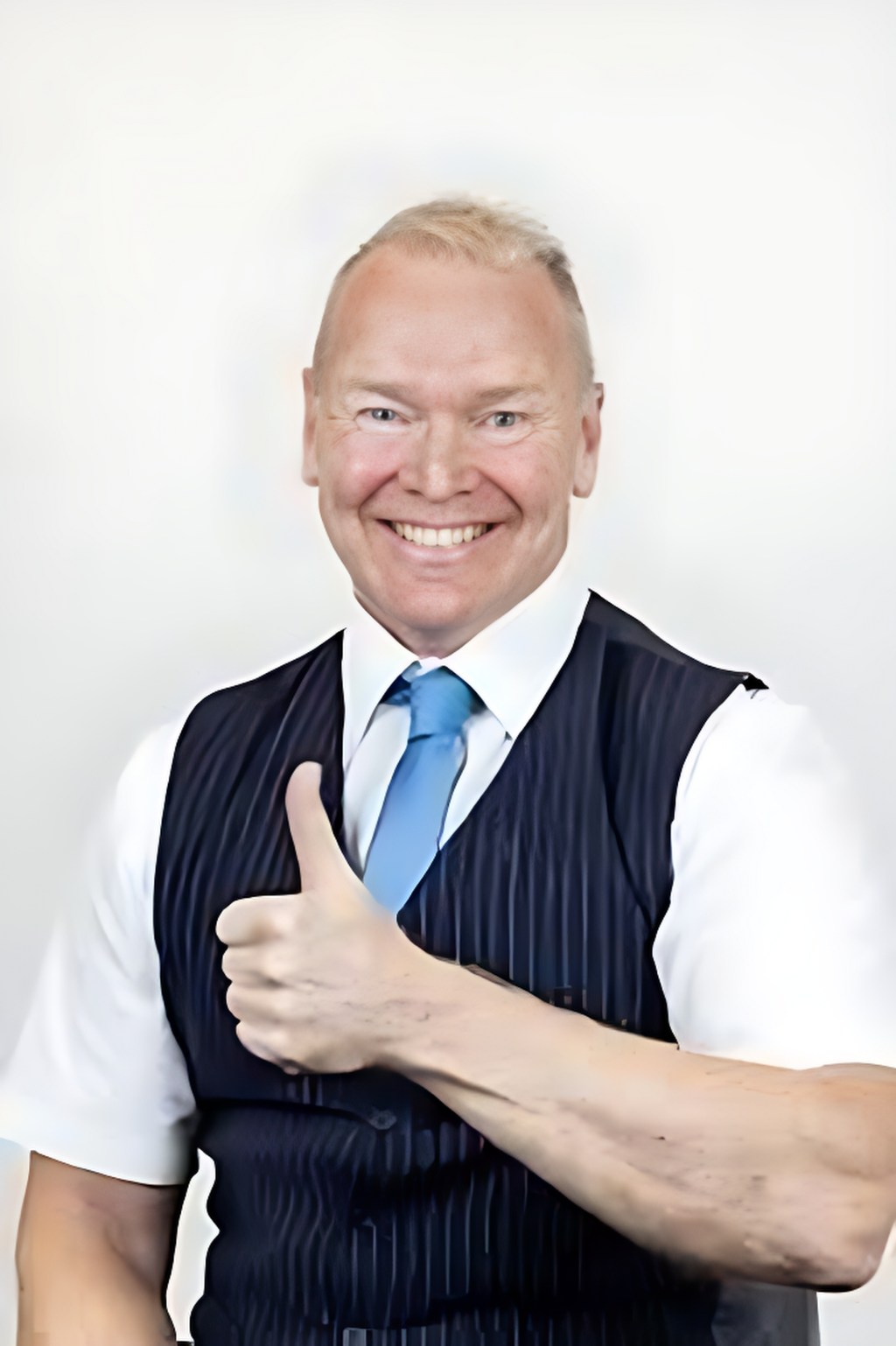
Chris Farmer is the parliamentary candidate in Gloucester for Reform UK. He agreed to sit down with me one afternoon and discuss his career, himself and politics.
Question 1: What does it mean to you to be a parliamentary candidate?
Chris: The Conservatives and Labour are Statists. They believe in a top-down system, whereas it should be a bottom-up system. I want to get Britain to back to what it should be. Rishi Sunak was never voted in. He was not voted in as PM by his own people. He wasn’t even voted in by his own party. His party voted for Liz Truss. Sunak was put in by the markets, the Conservatives didn’t want him. This is an example of where we’re not living in a democracy. So everything has to change, change back to what it should be. It’s already changed from what it should be. Over the last twenty years, I’ve watched it happen. Step by step. Piece by piece.
Question 2: What would be your top priority if elected as the MP for Gloucester?
Chris: The first one is to get rid of the so called ‘climate emergency’ that the council has unilaterally declared to destroy the road network in Gloucester. They want to ‘encourage’ us out of our cars. They use the word ‘encourage’, it sounds nicer. They’re not encouraging us, they’re forcing us. I would make it a car friendly city, that would be my first step. Because only with a car can people get into the city centre to meet their friends, do their shopping, etc. [The council] are going to kill the City of Gloucester. And they will kill it on Net Zero and Green Ideology. When I’m campaigning on the Gloucester cross, you’ll notice, you’ll see the high streets are dying due to the anti-car mentality. I’d make Gloucester a business and people friendly city by getting rid of all the charges put on us by Net Zero. The second one is to get rid of the negative effects of mass immigration. Housing is at a premium now, because we’ve allowed in 2 million people over the last two years. To keep up with that, we’d have to build the equivalent of the city of Bristol every year. But we’re not going to do that. So, what’s going to happen, as we have a limited housing stock, they’re going to be filled with people who have not contributed to the system. We don’t know their intentions, but we have homeless in Gloucester, some of whom are veterans who have served their country. Now they can’t find a flat, they’re sleeping in doorways. To help everyone, that can only be done with infinite resources. Gloucester doesn’t have infinite resources; it’s got very limited resources. And if you’ve got limited resources, you have to limit demand. The council want high immigration, but where are they going to house them? They’re going to house them in homes that then become unavailable to the people of Gloucester. I’m not against immigration, immigration is a perfectly legitimate idea.
Interviewer: Your website says you’re not against migration, only against unlimited migration?
Chris: We’ve got both unlimited and illegal immigration, both of which are unsustainable. If you say I’m against unlimited and illegal immigration, people say “Racist!” It’s got nothing to do with race, it’s economics. We have to prioritise scarce resources, and justice would say it should be people who have paid into the system using those resources, not the other way around.
Question 3: What is your favourite movie?
Chris: Rocky 3. When I saw that movie, I thought that was the epitome of an excellent movie.
Question 4: What is your favourite song?
Chris: Elvis Presley – The Wonder of You. I grew up with the tail-end of Elvis, I was born in 1962. And in the 70s, when I was fourteen, fifteen, sixteen, he was still a big star. I always wanted to be Elvis when I was a kid.
Question 5: What is Reform doing to appeal to younger voters?
Interviewer: I saw the removal of interest on student loans, but is there anything else?
Chris: Yes, and I think this is one of the most important thing, which is regenerating the idea that young people can start businesses. An enterprise economy. When I was growing up, it was a thing that once you left school, you could start your own business. Probably because of Thatcher, she was a big believer in small businesses. My father was a businessman. He was a coal man in the winter, and sold turf in the summer; so in my house that’s how we made money, was my dad’s small business. That idea of a family business, it was always quite high on the options. But ever since Tony Blair, there’s been this idea that everyone needs to go get a degree. But there are degrees that don’t give you any extra value in the marketplace. People come out of university with £40,000 in debt and no extra marketability. For the future of the country, and young people in particular, they need to start small businesses. They are the most important thing for the economy, because the great thing about small and medium sized businesses is that anyone can start one. My daughter runs her small business off her laptop. That’s all you need now: a laptop and an idea. So, if we could get young people running small businesses, instead of racking up £40,000 in debt, we could have hundreds if not thousands of new businesses in Gloucestershire. And in 10 years, 5% of those would be major employers. But we’re not encouraging this anymore, in fact the government have made it very difficult. Reform UK has very well pronounced and defined policies to encourage people off benefits and maybe not go to university and set up their own business: one of those is to raise the VAT threshold to £120,000, and the second is making the paperwork easier, such as easing the IR35 regulations. Reform want to make starting your own business simple and fair.
Question 6: Who is your hero?
Chris: I’ve got multiple, I’m a big believer in heroes. Philosophically, Aristotle and Ayn Rand. If you had to pin her down to three ideas, she is an advocate of reason, rational self interest and free market economics. I’ve read Ayn Rand, and you can see how people like Thatcher and Adam Greenspan were influenced by her. [Ayn Rand’s] terrific. But she is polarising, you either love her or hate her. If you’re a socialist, you’re gonna think she’s devil incarnate, because she was so against socialism. She argued for freedom to the maximum possible degree. And I think if you had to pin down my philosophy to one word, it’d be: Freedom. Freedom of speech, free enterprise economy, borders free from invasion, Britain as a free independent nation state.
Question 7: What was your role in the police force?
Chris: I was mostly a bobby on the beat with a little bit of Underwater Search Unit. Most of my time though was in Cheltenham and Winchcombe. But I left the police at the age of thirty as I broke my leg in a motorbike accident.
Question 8: What is your favourite spot in Gloucester?
Chris: Probably the Quays. I spend a lot of time there with my mother, who has dementia. I take her there a couple of times a week, so it’s probably my most frequented place and it’s one of the nicest places in Gloucester. I used to hang around King’s Square when I was younger. But Gloucester’s looking very tired now. And there’s drug addicts in the centre of Gloucester. Women come up to me all the time asking what I’m going to do for women’s rights because they feel intimidated in the city. And I haven’t got that on my website, so I might pump my ten things to do up to twelve.
Question 9: Should benefits be means tested?
Interviewer: Some people who are eligible for their pension, they still work. So, do you think they should not receive their pension until they stop working?
Chris: I think the old people have been lied to for decades. Since the idea of the welfare state, there’s been an idea of a social contract, that you pay into the system your whole working life, then when you’re old and need your hip replacement, you can have that because you paid in. You pay in, then when you’re old, you get your money back. But that’s not the case. Every generation pays their taxes, but that money’s not invested, it’s spent. Not for the future, for the now. But with the baby boomers, we have a pension problem. There are too many old people to match the working young. Which is why I think they want immigrants working here. When I was young, well my parents had four kids, most people have two now. So, the demographic now is that we’ve got an aging population, and politicians didn’t invest that money, they just spent it. And they borrowed, and spent that. Then they printed money, quantitative easing, and they spent that. Effectively, they’ve ran out of options. We are the most in debt we’ve ever been and they basically can’t afford old people anymore. So now they’re stuffed, and they’re shafting these people, saying that they’ve “paid in all their lives, but you’ve got to be means tested”. At the same time destroying the economy with net zero and mass immigration. I think politicians have been wrong on every issue since Thatcher. Thatcher was the last of the great politicians. We’ve never recovered from Blair. Blair was the first massively dishonest politician. He didn’t even believe in anything other than his own aggrandisement. And now he’s vowing to be Head of the WEF. But he’s a deceitful, money hungry politician. They say Right Honourable. I don’t think they’re Honourable, or Right.
Question 10: Do you think Nigel Farage better represents the values of the Reform party than Richard Tice?
Chris: I think Nigel Farage is a superior communicator than Richard Tice. Richard Tice is exactly what he seems to be. A businessman. Successful, intelligent, quite charming, honest. But I don’t think he’s a political animal as such. He hasn’t got that political noose that Farage has. Farage reads the room, by that I mean the country, he reads the country like no other politician. And I guess he’s probably a multi-millionaire and has had a successful education, I don’t know, but he’s got what you might call the “common touch”. When he sits in a pub and has a pint, it looks real. But when Rishi Sunak, or dare I say anyone, tries to do it, tries to pretend they’re one of the boys, it always falls flat. Farage is the most successful unsuccessful politician. They’re scared of him; they throw the kitchen sink at him every time he tries to stand. Last time the Tories broke their own rules on how much they’d spend to stop him. They overspent, they paid the fine, but they stopped him. But he’s probably the most influential politician since Thatcher or Blair.
Question 11: What is your favourite album?
Chris: Dark Side of the Moon by Pink Floyd
Question 12: How would you represent the people who don’t vote for you?
Chris: I go on principles. And I believe the principles apply equally to everybody. Like there’s laws in the legal profession that apply equally to everybody, there’s also moral and political laws, which I would consider the true principles of politics. These would pertain to things we’ve already said: Freedom, Equality, etc, under the law. Political law should be included “without fear or favour”. You don’t favour anyone because they voted for you, and you don’t fear anyone because they didn’t. Once you’re there you are the universal point of reference to all constituents, and that’s the only way it can work or else you have political corruption if you favour the people who voted for you. Or else you’re technically prostituting yourself to those people who did vote for you, and some politicians do. Like a policeman should be acting ‘dead straight and colourblind’, a MP should too.
Question 13: How would you ensure that more small businesses can open in Gloucester?
Chris: To raise the VAT threshold to £120,000 and making the paperwork easier.
Question 14: Would Reform, if elected, keep the Rwanda plan?
Chris: Rwanda is a sideshow. The Rwanda plan is set up pretending to be a deterrent. And it’s not. The only way to deter illegal immigrants is failure. If you spend your whole life savings to get to Britain, and you end up in France, you’ve failed. So, the problem is in the English channel. So, the solution is in the English channel. It won’t be in Rwanda. The Rwanda plan redirects the conversation from the channel to Rwanda. The press saying, “oh the plane didn’t take off”. Let’s say you’re a pickpocket, one of the most important things you do is to diver attention, you wave your hand over here whilst the other hand steals something. It’s a diversion tactic. Rishi Sunak has no intention of stopping the boats. He has it written in front of him, and if he wanted to stop the boats, he cud do it tomorrow. But he wont because its not art of the agenda. He has to act as if he has got a way and he’s pretending the Rwanda plan is that way, but it’s stupid, I don’t know who thought of it, I wouldn’t have thought of it in a million years. It’s so ridiculous, I dot know anyone could have thought of it in the first place. They won’t send people to Rwanda and even if they did, it wouldn’t stop people coming because the actual number of people they’ve sent is one, isn’t it?
Interviewer: Yeah, I think it’s one.
Chris: And how much did that cost us? More than £2 million. So, the whole thing is a political sideshow to keep you staring in the wrong way whilst they pick your pockets. Dishonest, as usual, politicians using rhetoric rather than logic.
Question 15: What’s your favourite book?
Chris: Lord of the Rings. I read the hobbit when I was eleven, and I read the Lord of the Rings when I was thirteen and I’ve been reading it ever since.
Question 16: What do you think is the cause of crime?
Chris: Human decision. One of the fallacies of modern psychology is called behaviourism, which says you’re a product of your environment. False! Your environment is a product of you. Your bedroom, the way it looks, is a product of you. If I put someone else in that bedroom, it would look different. People commit crime for a single reason: they believe that by doing it they are better off than if they didn’t do it. Now that is a basic theory, its my old simple theory, but I think it bears down when you watch. Every single thing everyone does, they believe they’d be better by doing it than not doing it. If they didn’t believe that they wouldn’t do it. Now that doesn’t mean to say they are really better off; it just means that they believe they will be better off if they act. Many things feed into that like religious beliefs. But the fundamental principle is people act in ways that they think will be beneficial to their own outcomes, and they define benefit in their own terms. It’s always a mistake to say poverty creates crime. It’s the other way around: crime creates poverty. If you’ve got a high crime area, businesses won’t set up there because they’ll get robbed. So yes, there’s a correlation between poverty and crime, agreed, but psychologists get everything backward. They say, “oh look there’s poverty and there’s crime here, that means poverty causes crime”. No, it doesn’t, it’s the other way around, you fool. Crime causes poverty. If a man thinks he can get by by stealing from houses, why work? Most of the time he thinks burglary is too risky though, so he doesn’t earn anything. I found in the police, most people who robbed houses were skint. So that’s what causes crime: human decisions. So there’s two things we have to do here: number 1, that the general culture does not stand for it, and secondly, we’ve got to make it so that calculation by the criminal comes out in favour of not doing the crime. The police and cps are so woeful, and the magistrates are so timorous, people think “why not steal? Nothings going to happen to me.” So, I think Tony Blair, I can’t stand Tony Blair, but he had one great line: “tough on crime, tough on the causes of crime”. But the cause of crime is not poverty, the cause of crime is criminals, obviously. The criminal is a mindset. You could have someone from the nicest home in the nicest part of home and they could still be a criminal. And that’s happened millions of times. And then you could have someone from the most poverty-stricken, abusive home and he turns out to be a good kid, a good man, a good woman.
Question 17: Backbench MPs have been said to have in recent years betrayed their party more. If you were elected MP would you follow the Party or the Constituency?
Chris: That’s a very interesting question, but I think it’s more than two. When you’re standing as an MP, you’ve got different things you base your judgements on. You could be representing the people who put you there, the party, your self-interest or you could represent a set of principles. I answer the last one, I stand on a et of principles. The way I do politics is I’m not representing Nigel Farage and the reform party; I’m representing a set of principles. And that set of principles most aligns with Nigel Farage and the reform part. Not 100% of them, but that’s impossible. But most of them. I stand in front of the Gloucester people, and I say “I represent these policies. If you want to vote for me, vote for me. If you don’t, don’t.” I hope people are swayed by the principles you stand for. If I had to be swayed by the people, the party, self-interest or principles, id be swayed by principles.
Question 18: What is your opinion on AI and if it can benefit us or not?
Chris: AI is like any other technology; it represents a threat and an opportunity. Its always been the same, since the dawn of time. The people with the best technology wins. But it harms those without it, its saying “get on board guys or else you’ll be left behind”. I love AI, I use it very single day. But it does have the potential to put me out of business. I recognise that. I’m a trainer, I sell training course, but I also know that YouTube and all this free material could put me out business. Not because it could do better training than me, because it can’t, but my customers don’t know that, so the customer thinks “should I go to Chris Farmer for a couple of hundred pounds or ask ChatGPT for free? I’ll ask ChatGPT for free”. They’ll get an inferior answer, but it will get an answer. And the person question will, as far as they’re concerned, been answered. So that is true, it can kill mine and other businesses. Lawyers, teachers, computer programmers, it can kill those jobs. But it can increase massive amounts of productivity, things that could have been done in hours can be done in minutes. So, I think if you’re lazy, it’ll put you out of business. But if you’re creative, it’ll help you.
Question 19: What are your opinions on Gloucester becoming very forward in becoming Net Zero with the development of javelin park and the creation of a new forested area by the Hempstead tip?
Chris: That every £1 being spent on net zero is £1 out of someone’s pocket. One job for Net Zero is three other jobs being taken away. Net Zero is a fake. If you believe that the world is ending due to CO2, which I do not buy, but even if you do, then Britain’s contribution is negligible. Our total output is less than the annual Chinese increase. They’re building so many coal-powered stations their increase is higher than our output. So, if you’re saying you’re taking away jobs, livelihoods, your motor car, make our food more expensive, make our roads no good, they’re going to trash the economy on this wide-eyed theory which isn’t true in the first place. There’s no chance that anything done in Gloucester will have any impact on the overall environment. Change is inevitable, you can’t stop it, but humans adapt to it, you can’t stop it. There’s another thing I’d like to say about climate change and these so-called rising water levels, which if its true, which it isn’t, that humans being causing climate change, it isn’t true. Climate change is true, you can’t deny it. But huma beings, I deny that that’s true, but even if humans were riving the climate, changes take centuries to occur. In any one lifetime you won’t notice the difference. If the coastlines change, it’ll take 300 years. And we can just move cities back bit by bit. As one street gets covered, another moves back. This is my claim: net zero is an ideology, not a science. Its about economics, not the planet. It’s a money-making scheme. How many people are making money on it? How many people are losing money on it? Money is driving this, it’s got nothing to do with the planet. But every time you say this, they spit at you and say, “climate denier”. Now when they say, “climate denier”, its obvious reference to “holocaust denier”. Can you see the rhetoric gong on? This ain’t science. If you were a scientist, you wouldn’t insult people, de-platform them, spit on them. Science is about reputation. It’s called the falsifiability theory. In other words, a scientific theory should be falsifiable. But climate change is not falsifiable. If its hotter, they say climate change. If its older they say climate change. If its wetter, its climate change. So, this is a non-falsifiable theory. Its not scientific. Karl Popper’s distinguish between a scientific theory and a pseudo-scientific theory is that a scientific theory can be disqualified/disproved. And a pseudoscientific theory cannot be disproved. If it snows, its climate change. If it fails to snow its global warming. Its dubious. I do not intend to throw my economic wellbeing and my freedom and my car on to the fire they call climate change. I don’t buy it. And they’re forcing it on us. Gloucester council didn’t ask anyone if we wanted to declare a climate emergency, they just did it unilaterally.
Question 20: What would be Reform’s top 5 priorities in the first 100 days of government?
Chris: 1. Cut down on mass immigration.
2. Drop taxes
3. Stimulate a growth economy
4. Reform the NHS
5. Get rid of ‘woke’ culture and cut down on the civil service, they’ve been a nuisance recently.
You said how important it is to stay neutral. And we need a civil service that is neutral, and they’re not. They’re certainly anti Brexit. You’d see the civil service as a mechanism by which politics is put into practice? As opposed to a group of people with their own political views and if anything contrasts their views, they scruff the brakes. I’ve never been in politics; I’ve never been to the House of Commons. But you hear politicians complaining all the time about the civil service putting the spanner in the works.
I thank Chris for taking time out of his busy schedule to talk to me. If you would like to know more about Chris Farmer, his website is here.
 The Public Gallery
Leave a comment